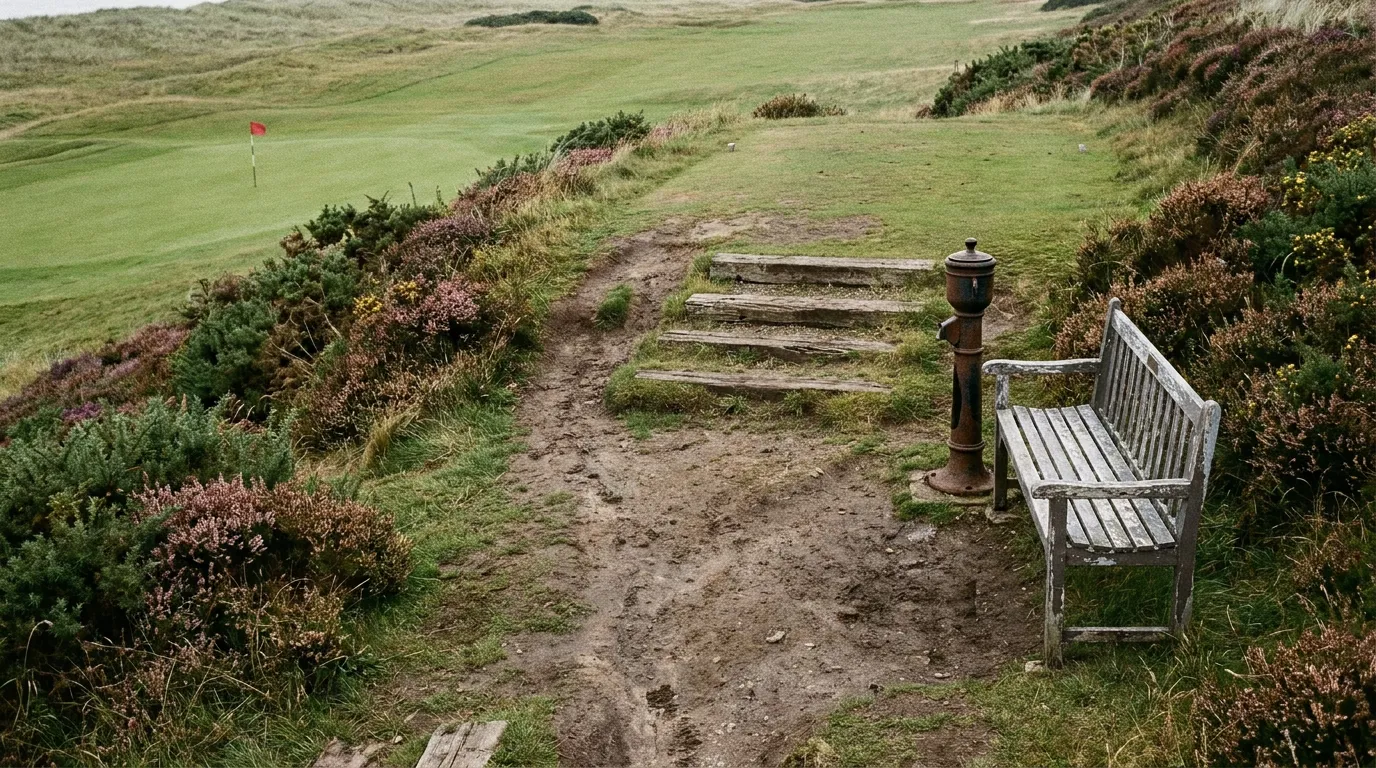
Golf prints, all twenty, described by what they show.
Every one of these is an invented hole, painted rather than photographed, and no club is named anywhere in the range. That is a limitation worth stating at the top, and it is also why a painting cannot be the wrong course. Below, all twenty, grouped by the ground they show or the part of the day they catch.
Chosen for this page
Every artwork here is AI-made and printed to order. Made to order: allow 4-9 working days for UK delivery.
-
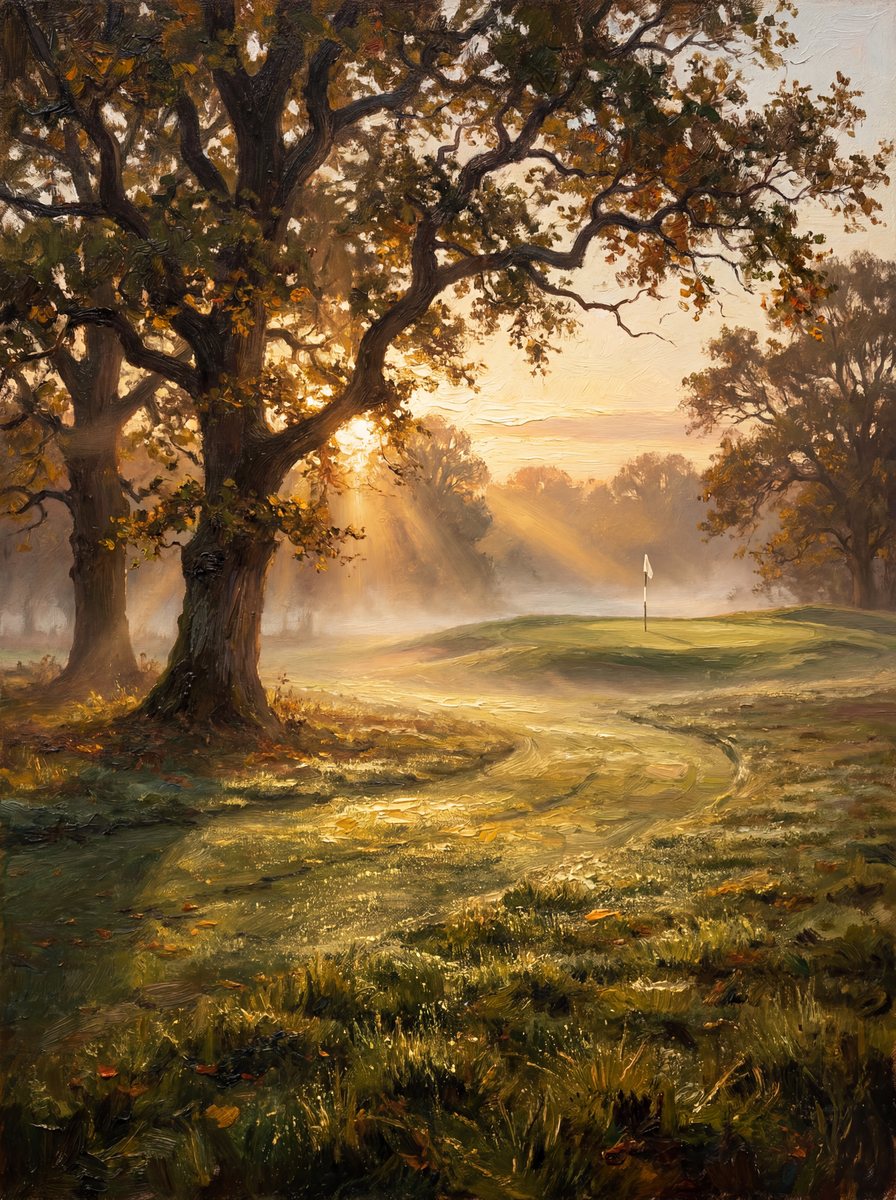 The First Teefrom £17.99
 -
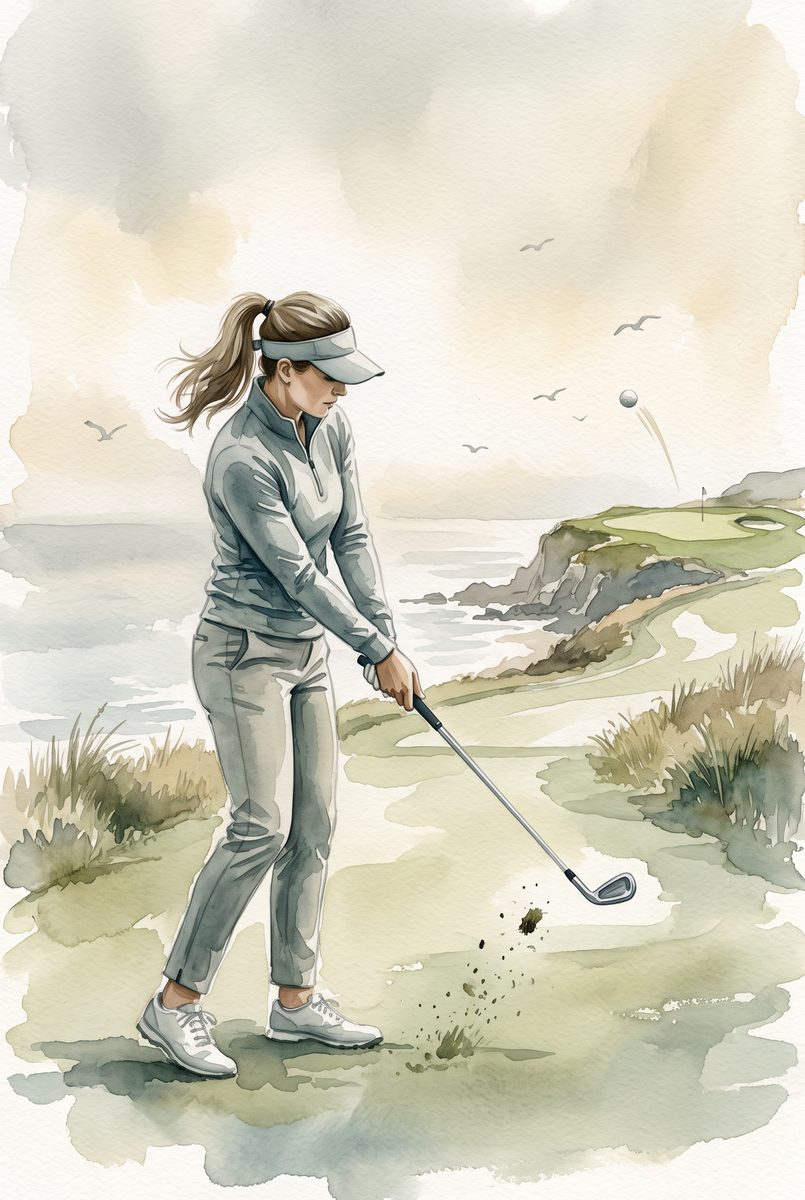 The Coastal Approachfrom £17.99
 -
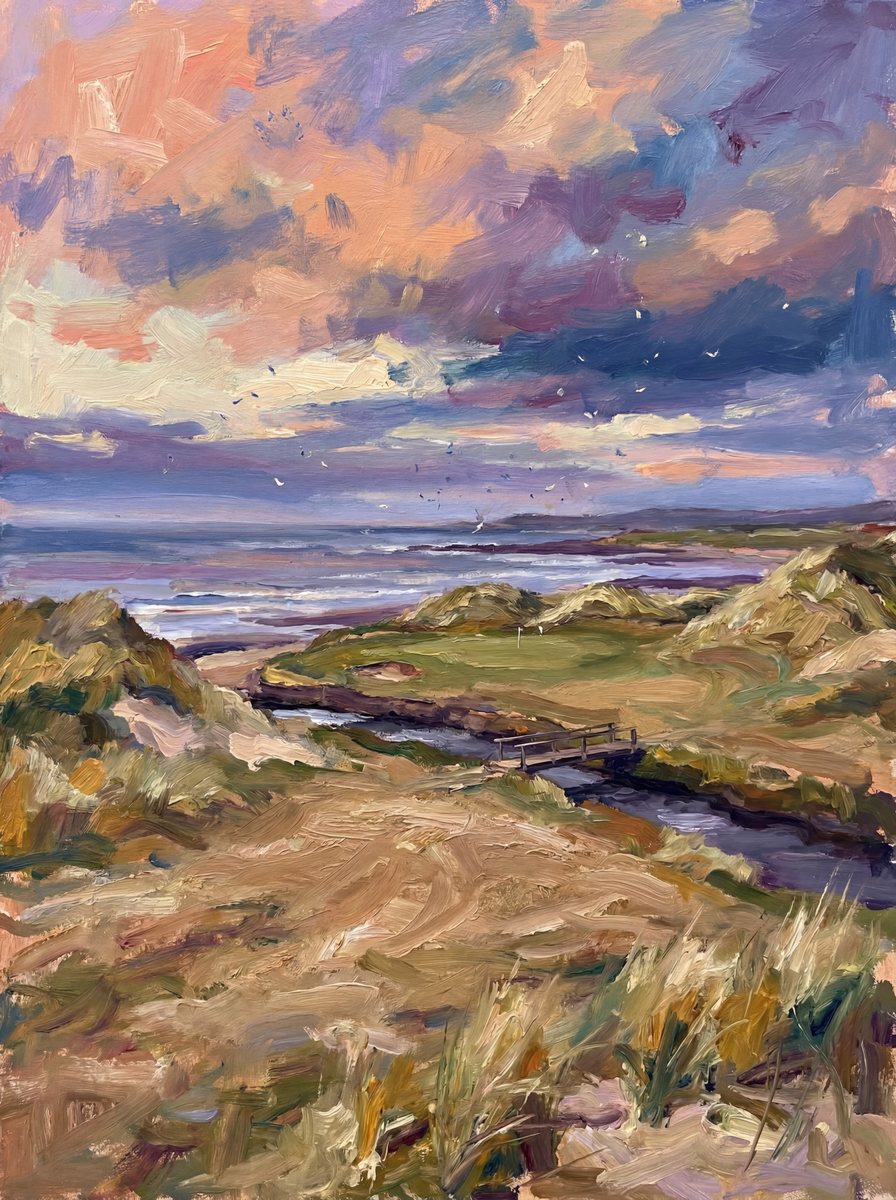 Links at Duskfrom £17.99
 -
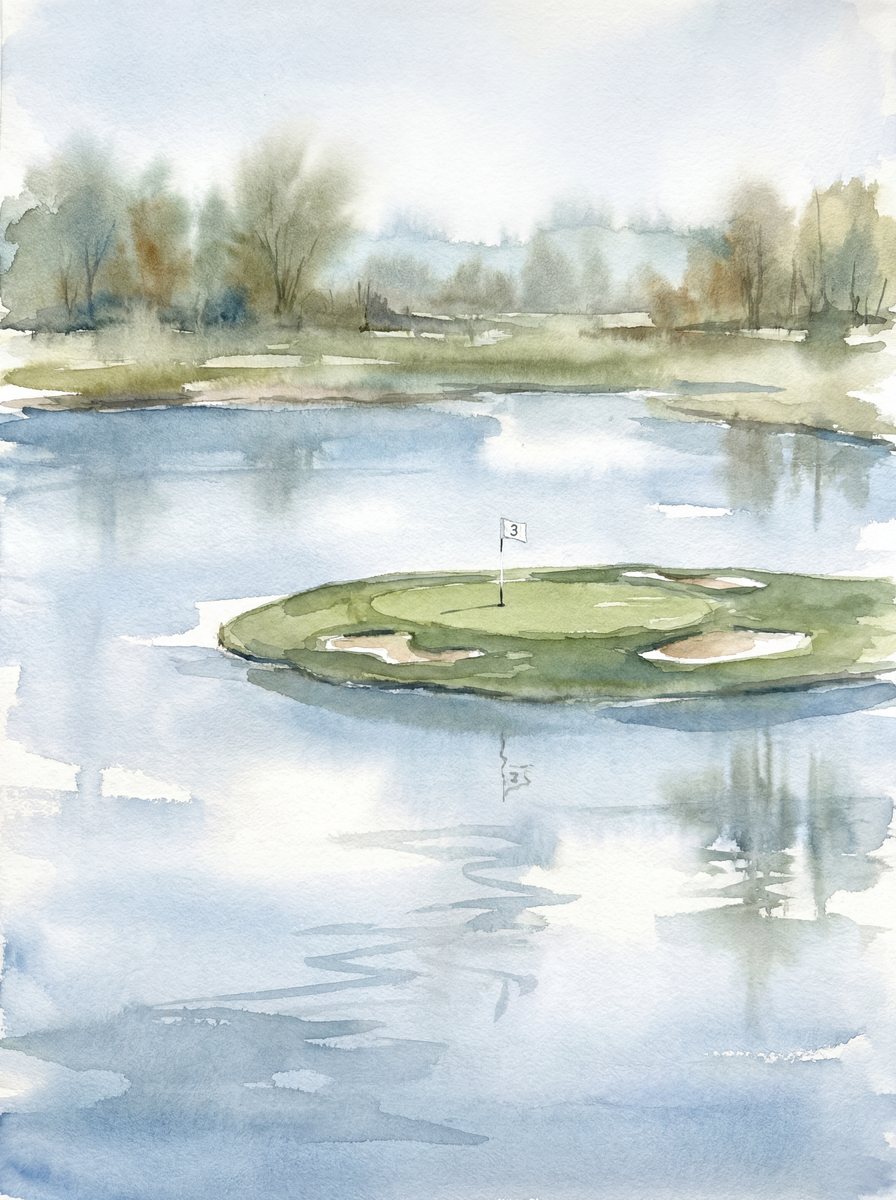 The Island Greenfrom £17.99
 -
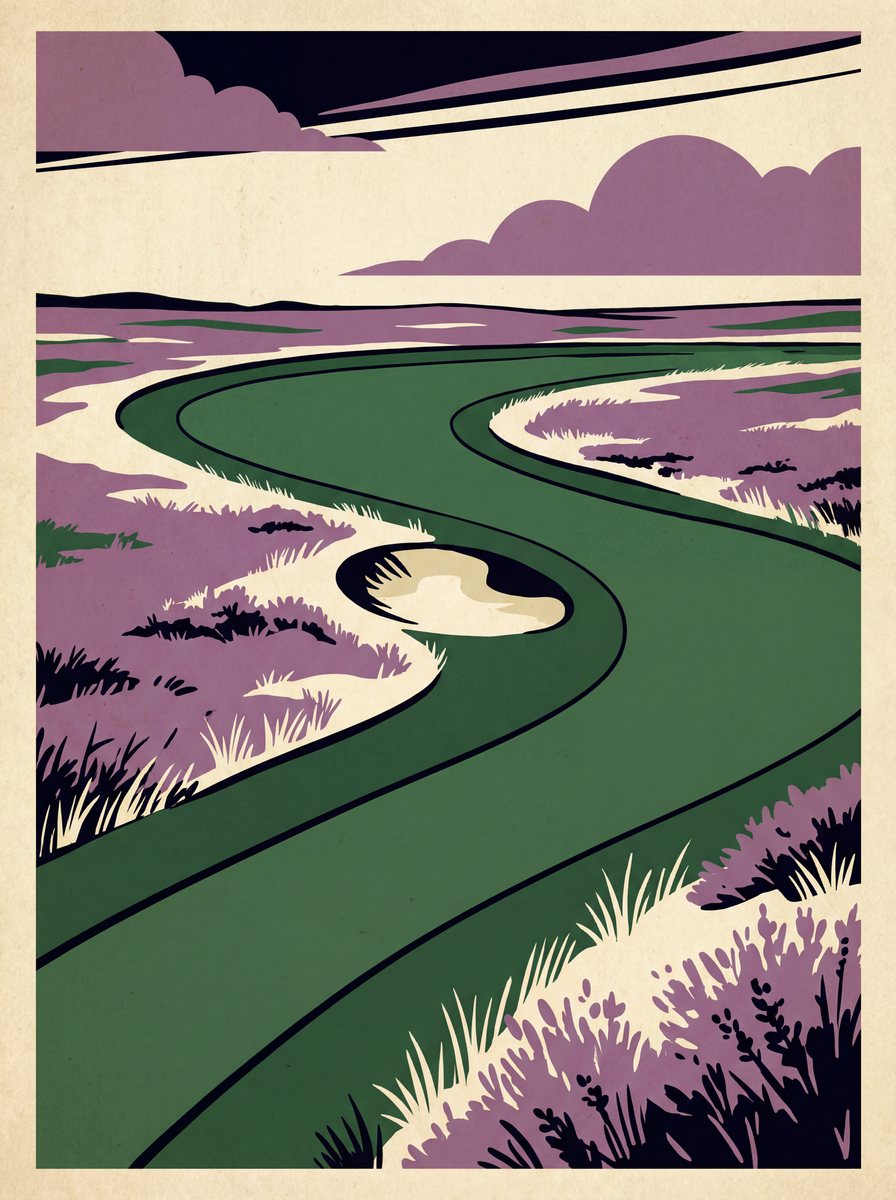 The Long Fourthfrom £17.99
 -
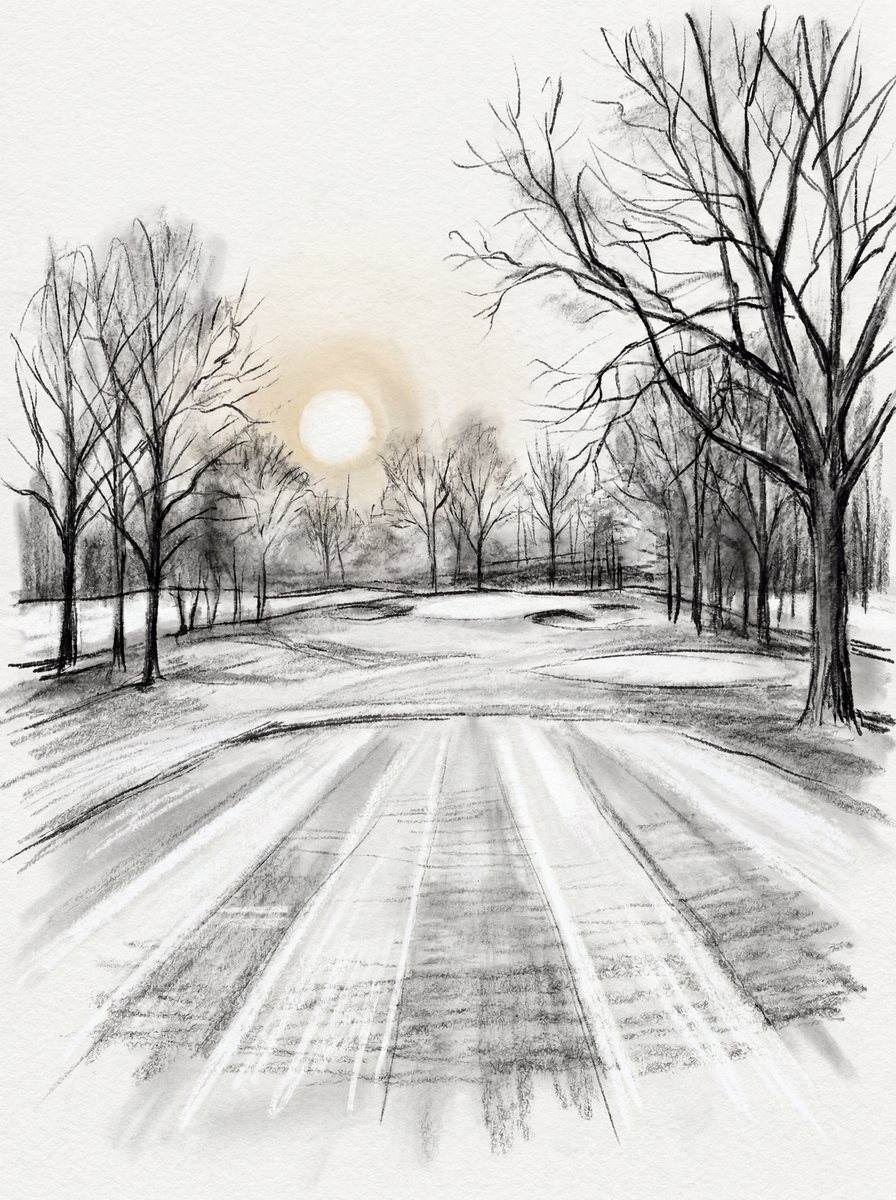 Winter Roundfrom £17.99
 -
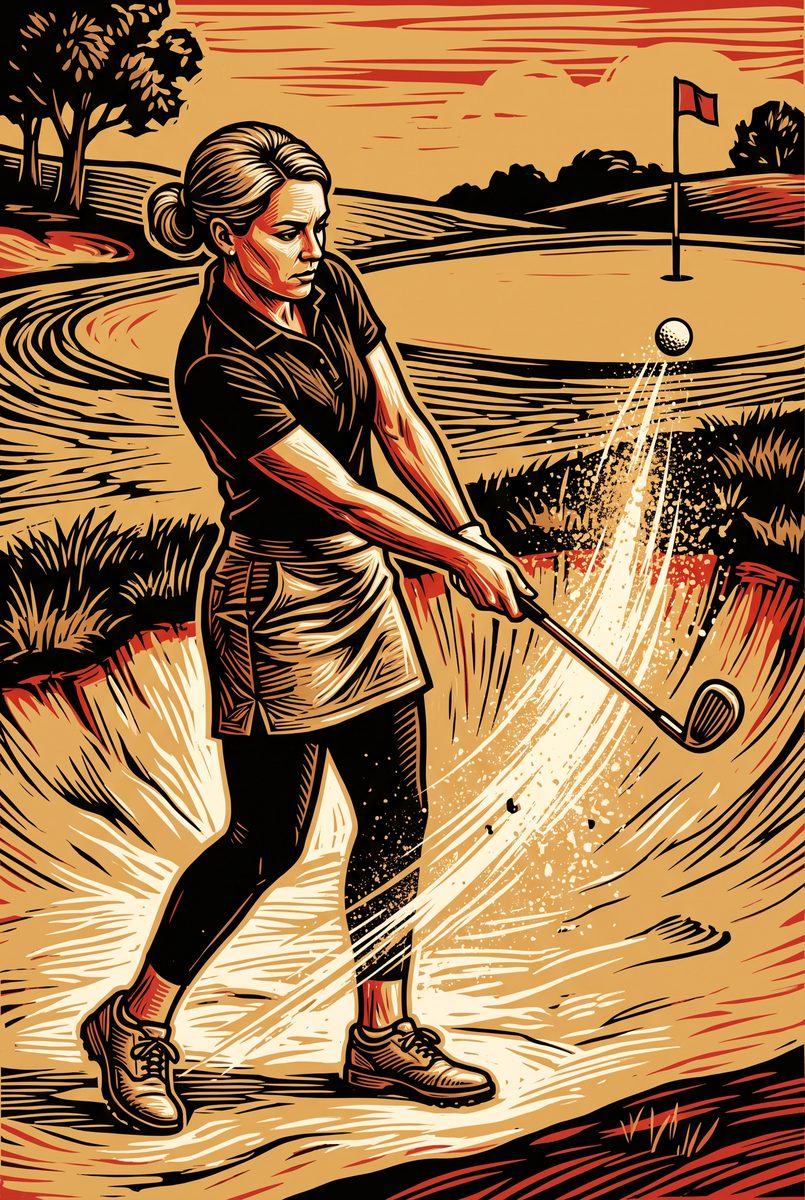 Out of the Sandfrom £17.99
 -
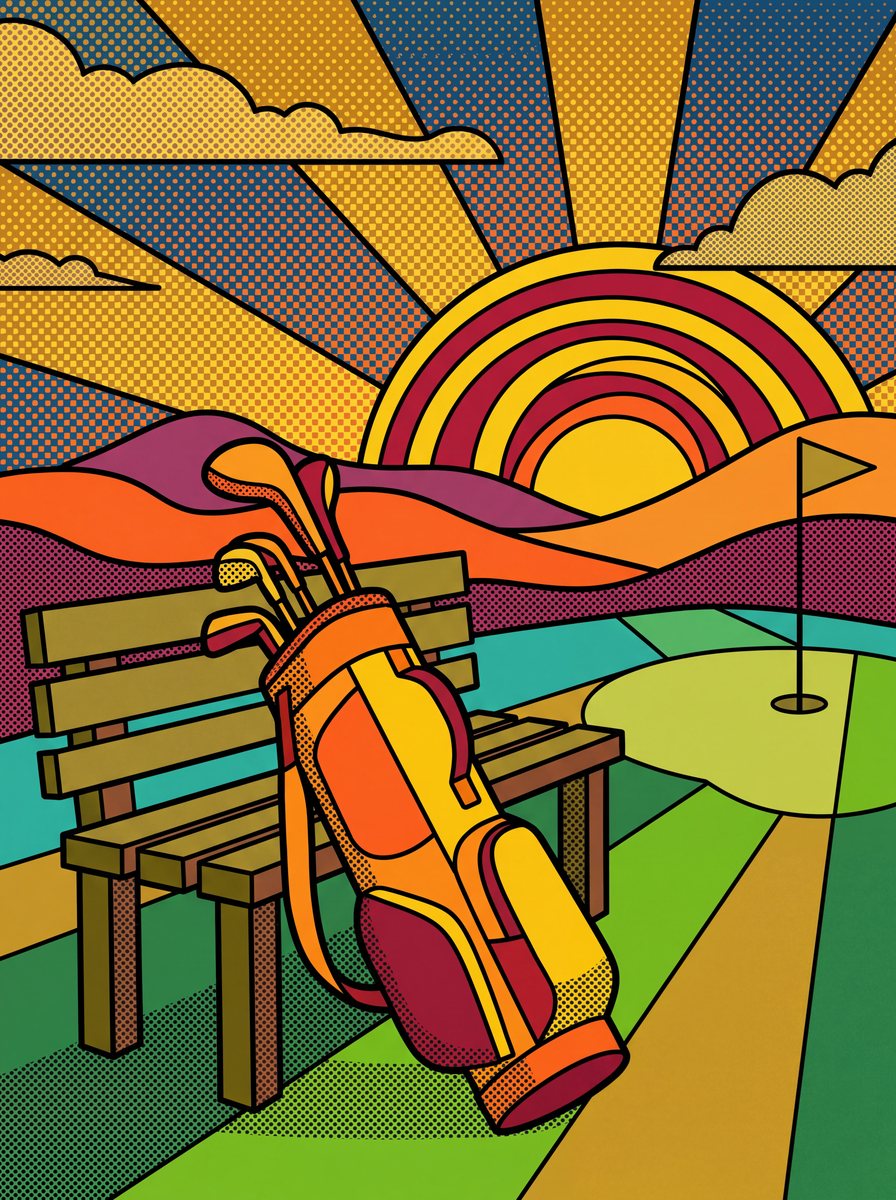 The Nineteenthfrom £17.99
 -
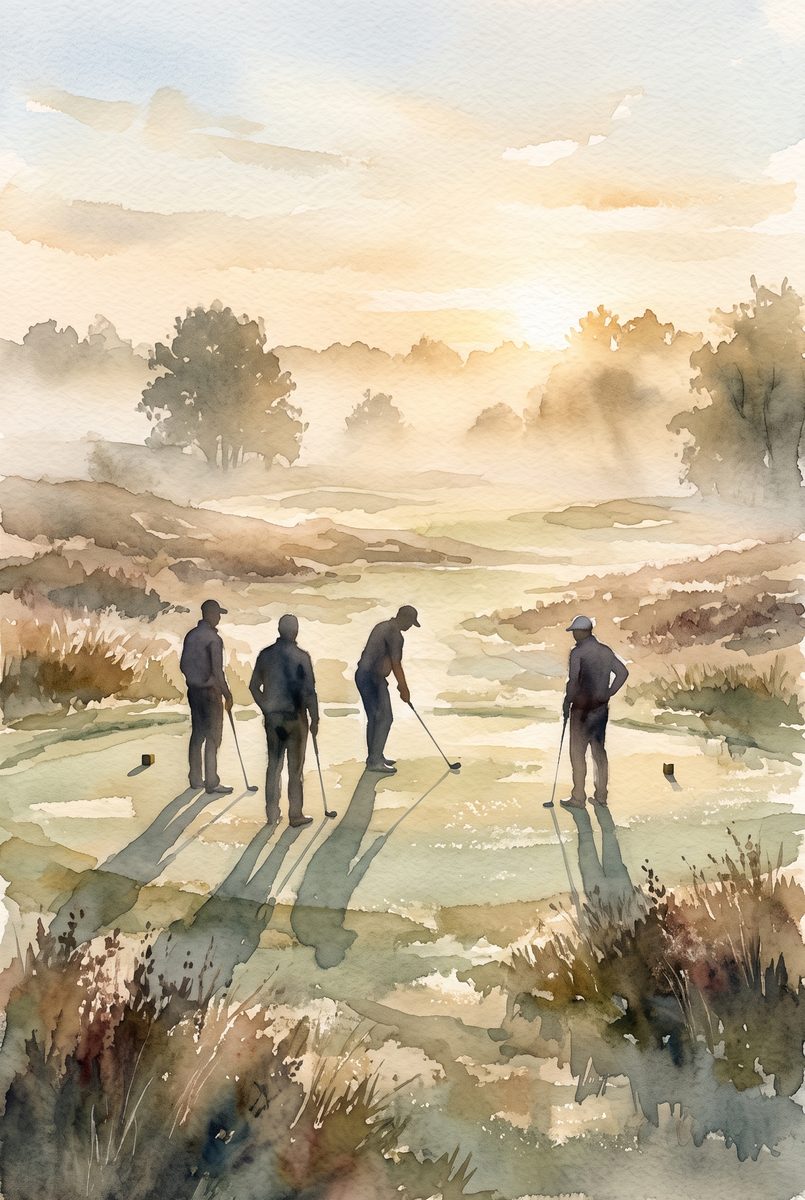 Dawn Fourballfrom £17.99
 -
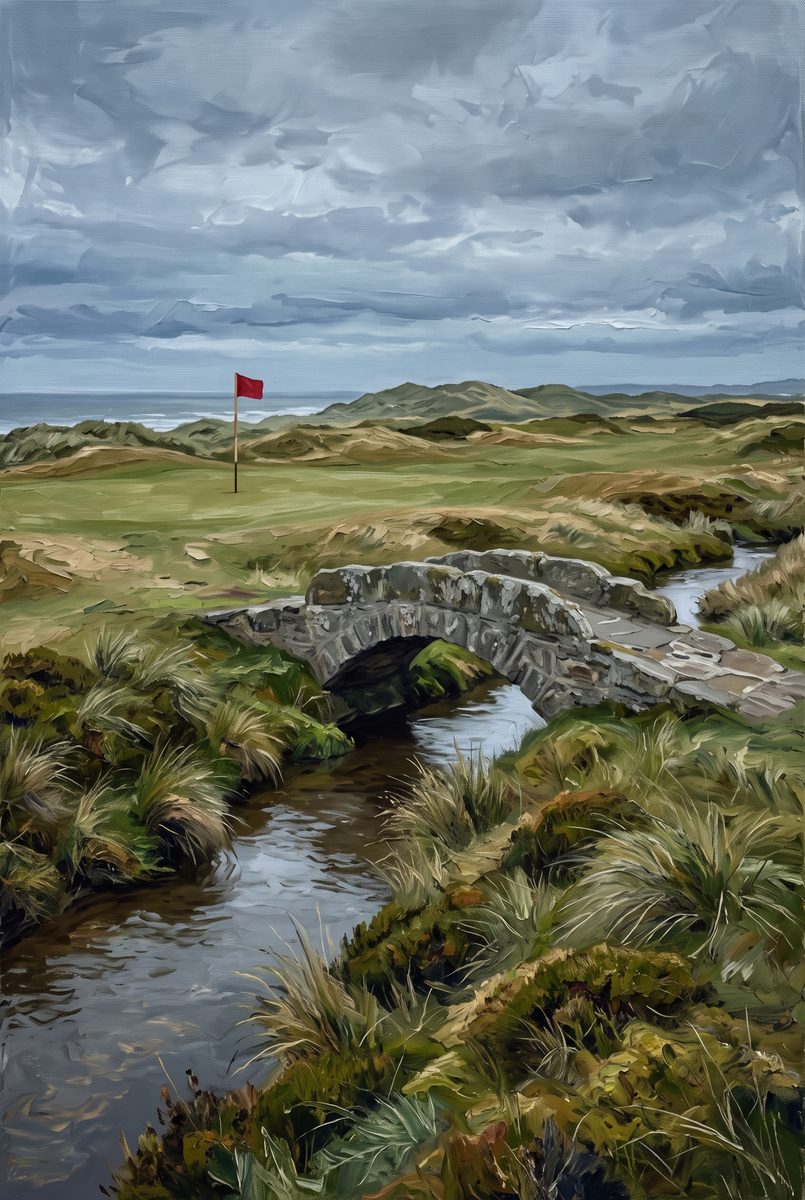 The Stone Crossingfrom £17.99
 -
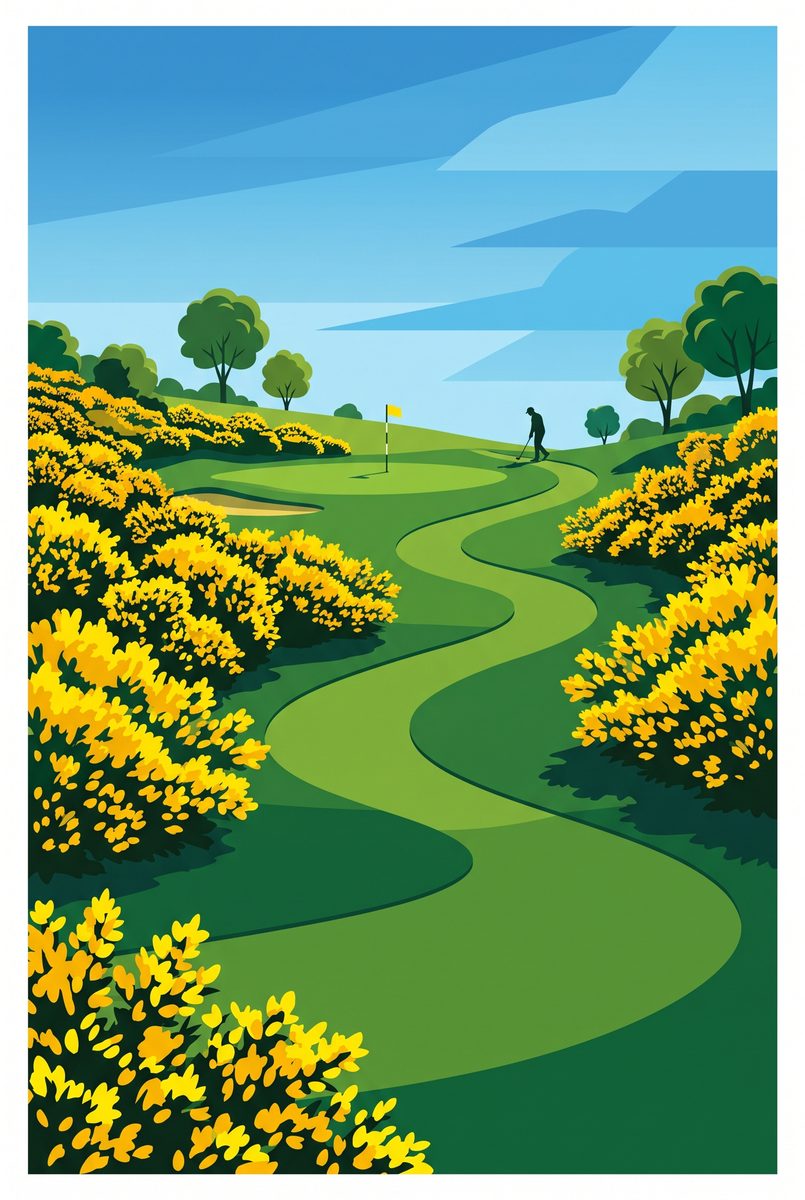 Gorse in Bloomfrom £17.99
 -
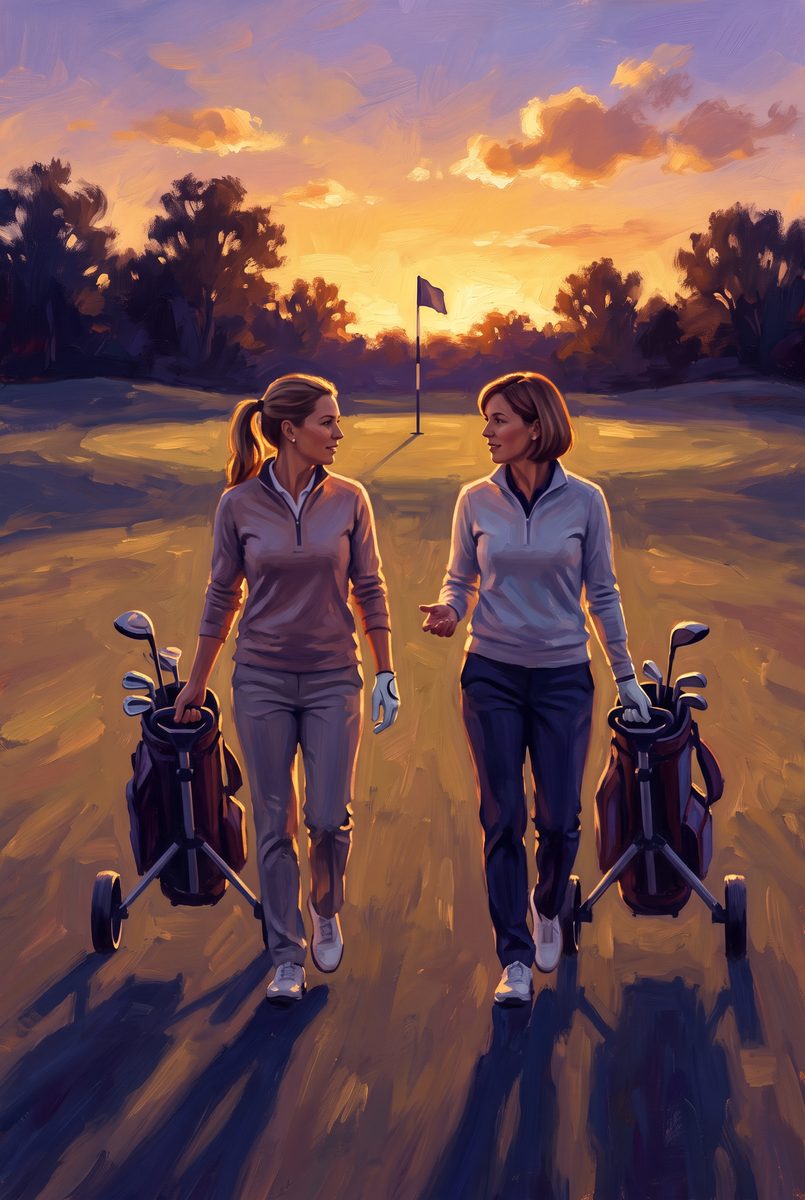 The Evening Pairfrom £17.99
 -
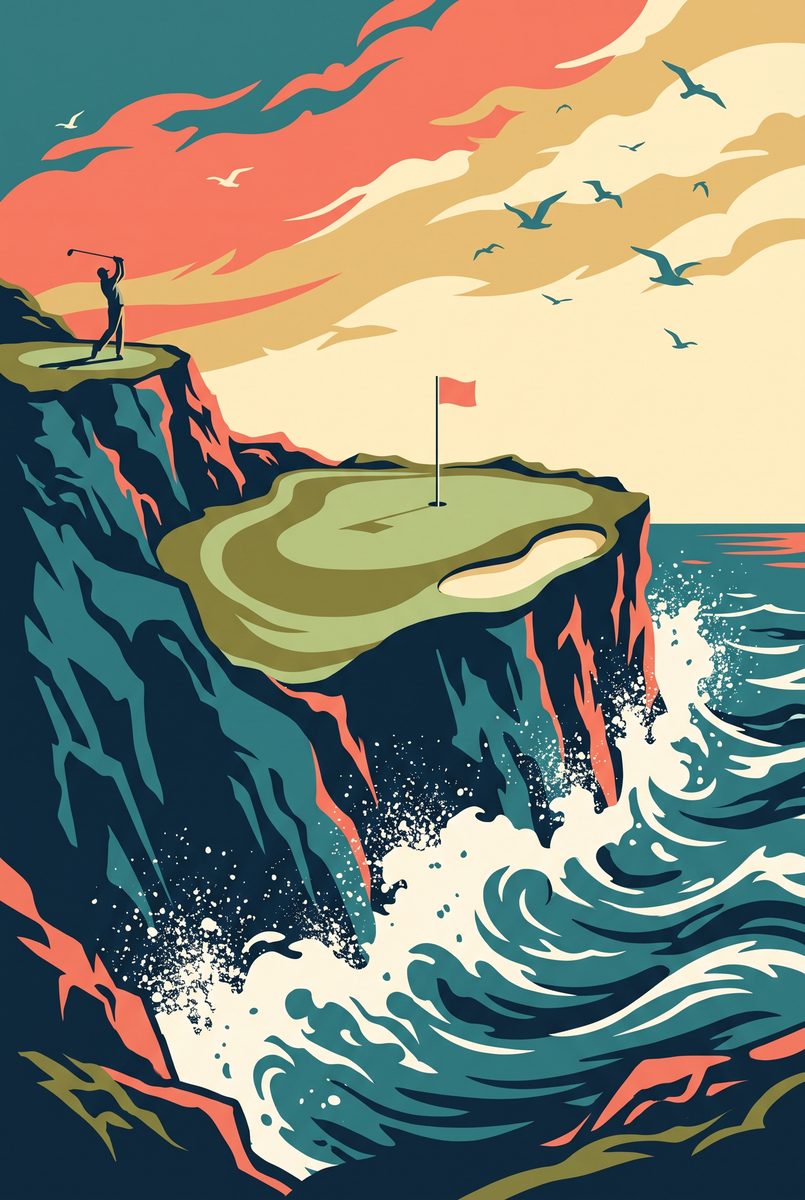 The Clifftop Shortfrom £17.99
 -
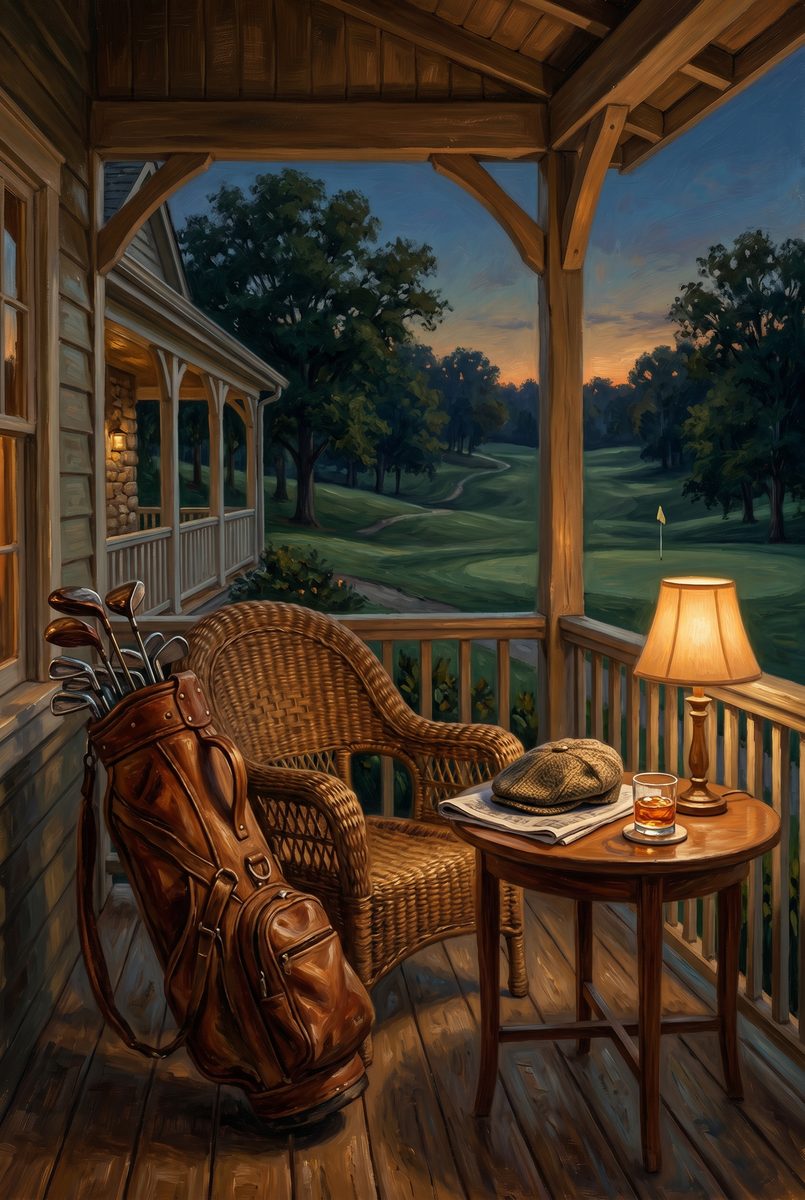 Clubhouse Eveningfrom £17.99
 -
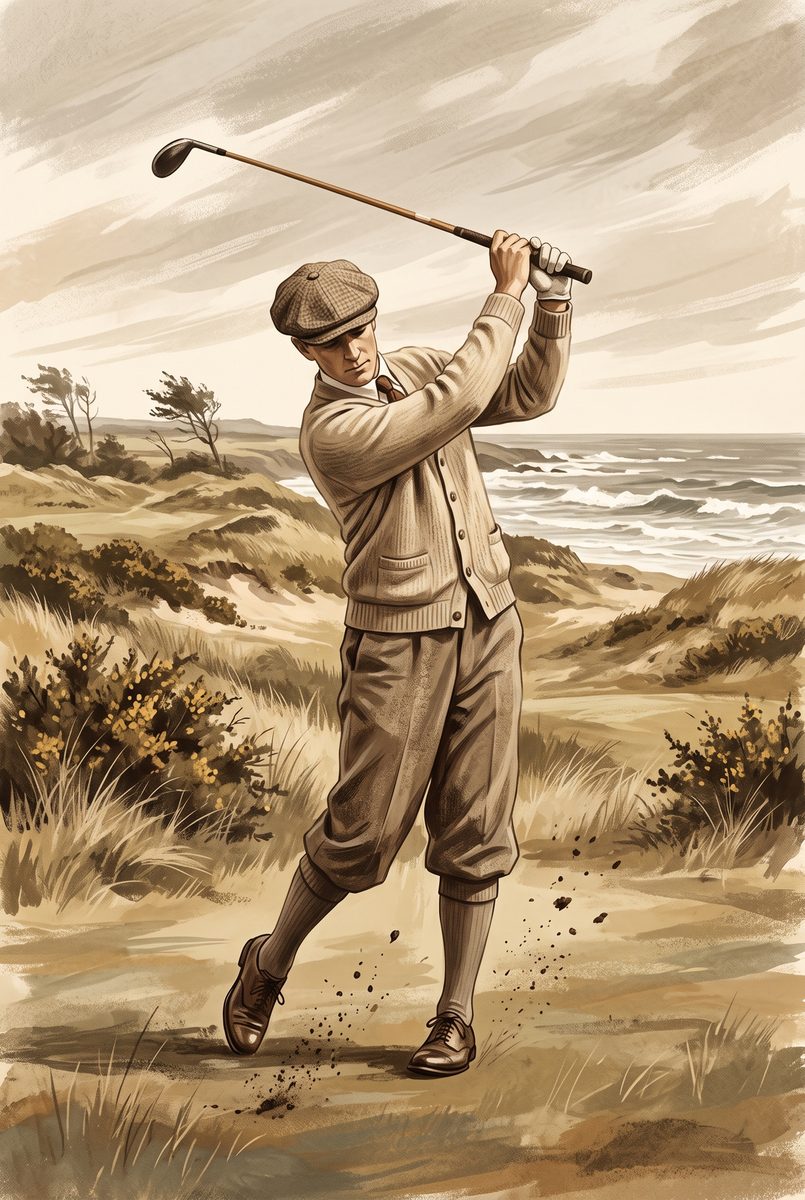 The Hickory Swingfrom £17.99
 -
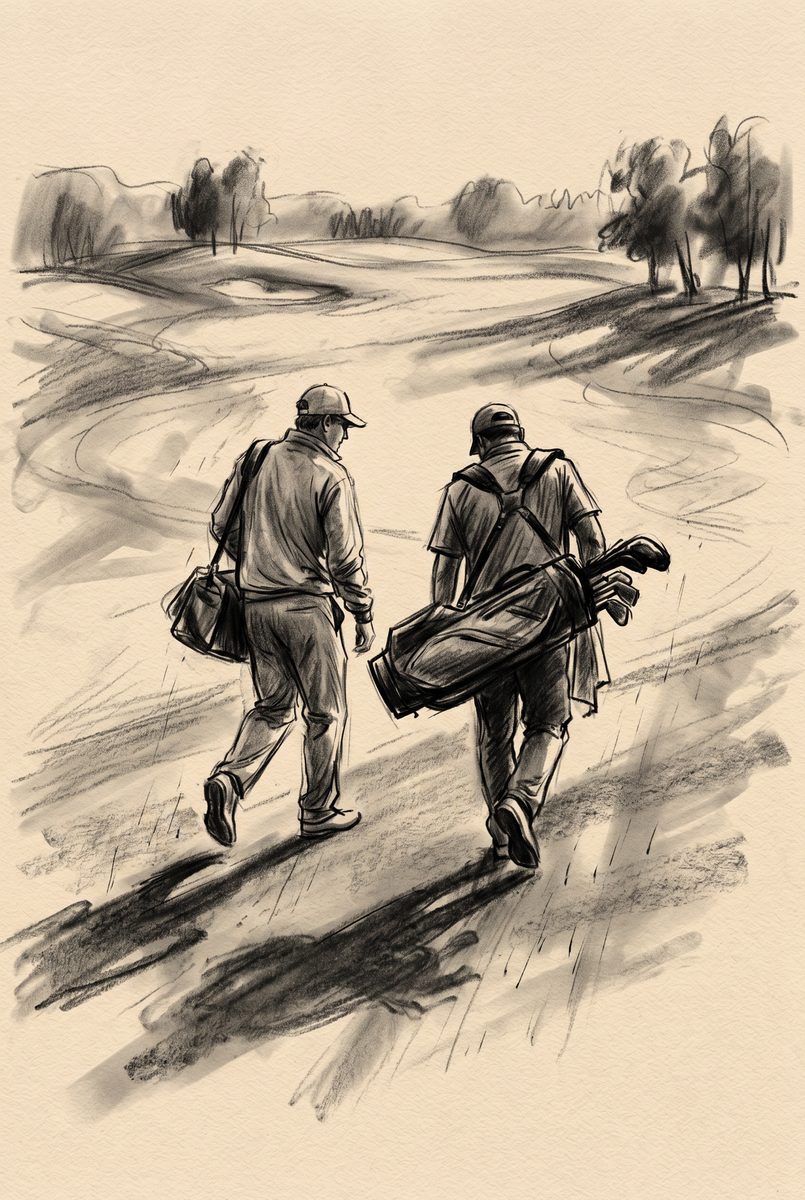 Player and Caddiefrom £17.99
 -
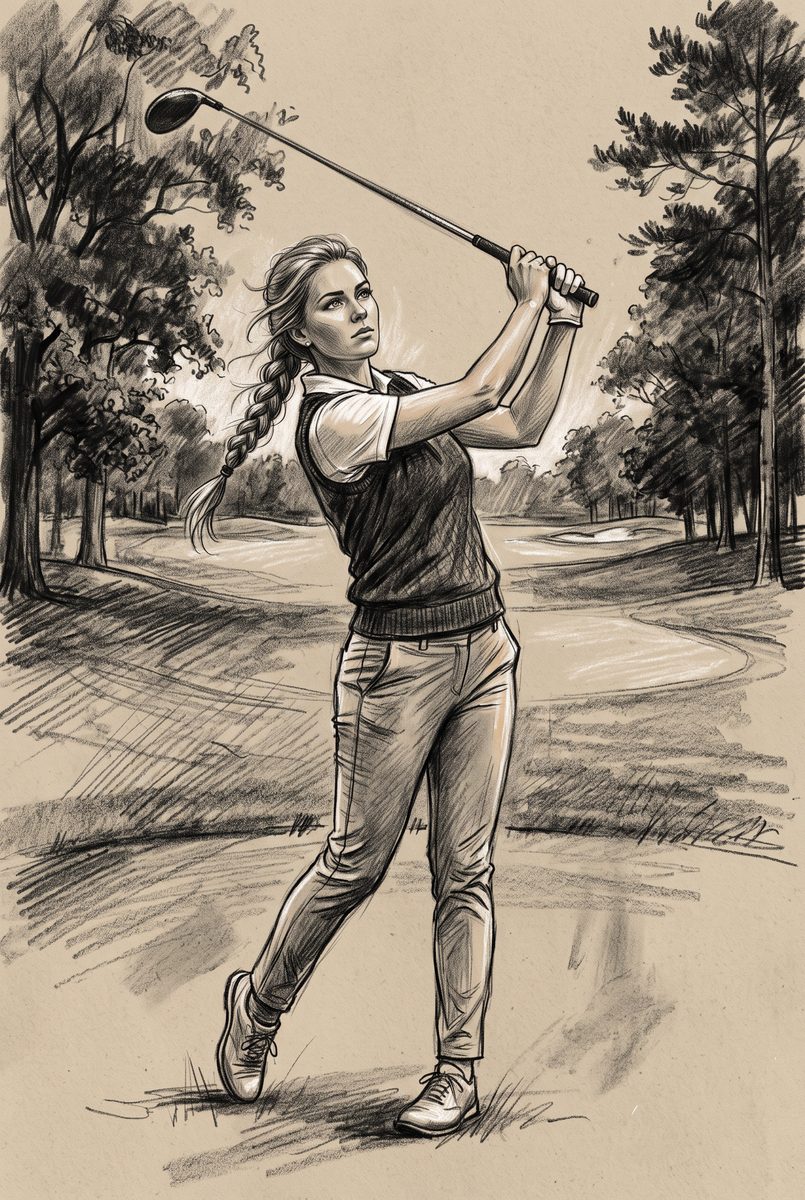 The Morning Drivefrom £17.99
 -
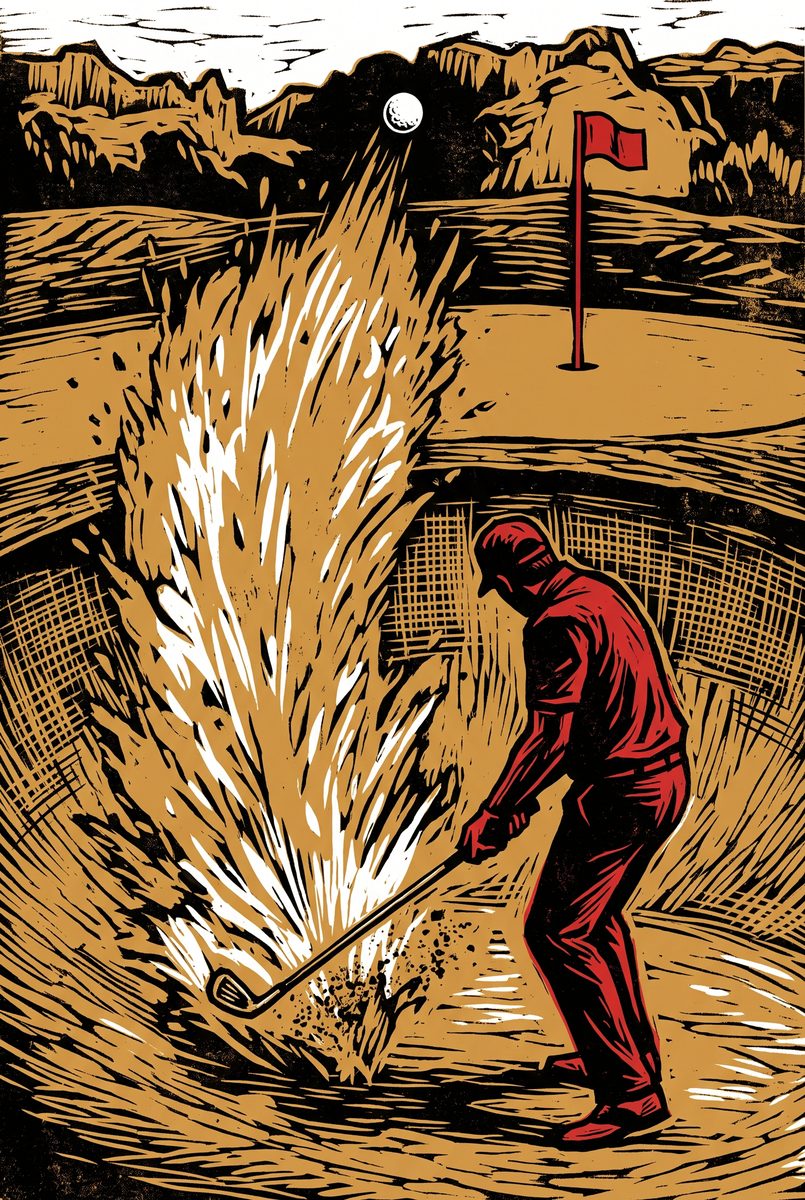 The Bunker Blastfrom £17.99
 -
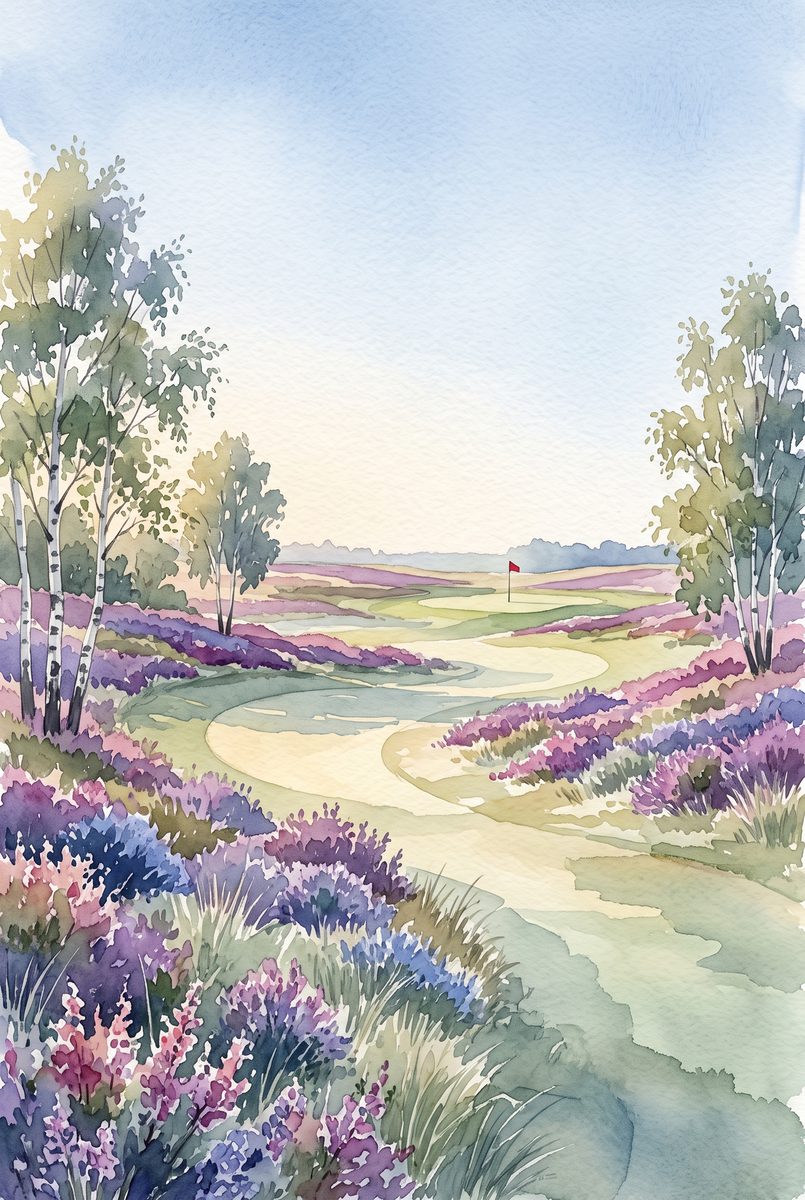 Heathland Morningfrom £17.99
 -
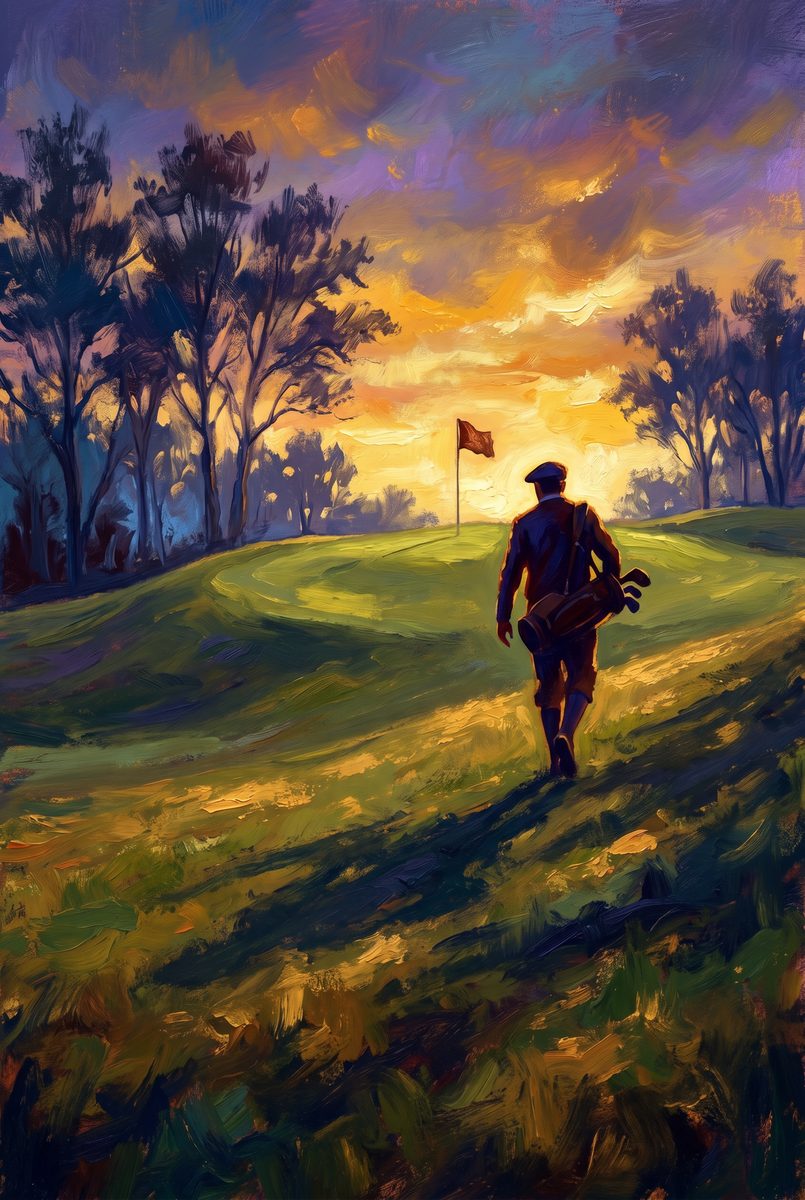 Twilight Roundfrom £17.99
 -
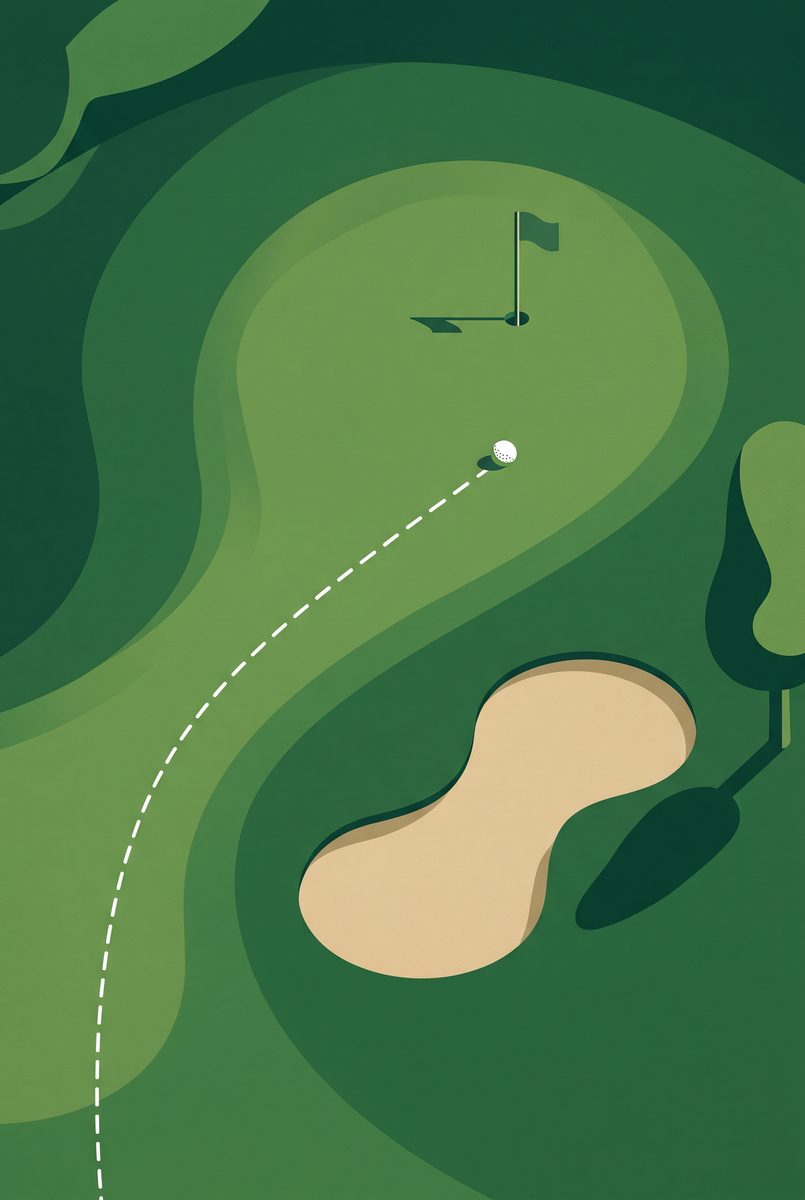 The Putting Linefrom £17.99
 -
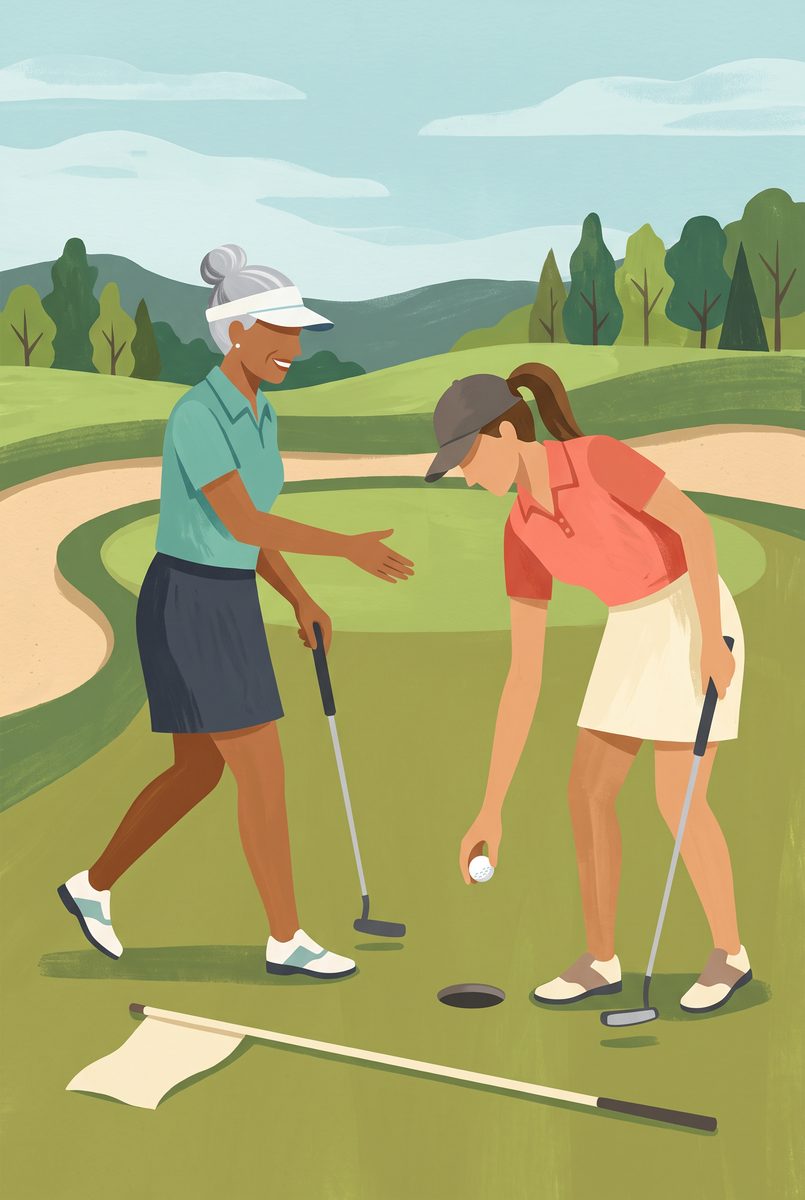 The Holed Puttfrom £17.99
 -
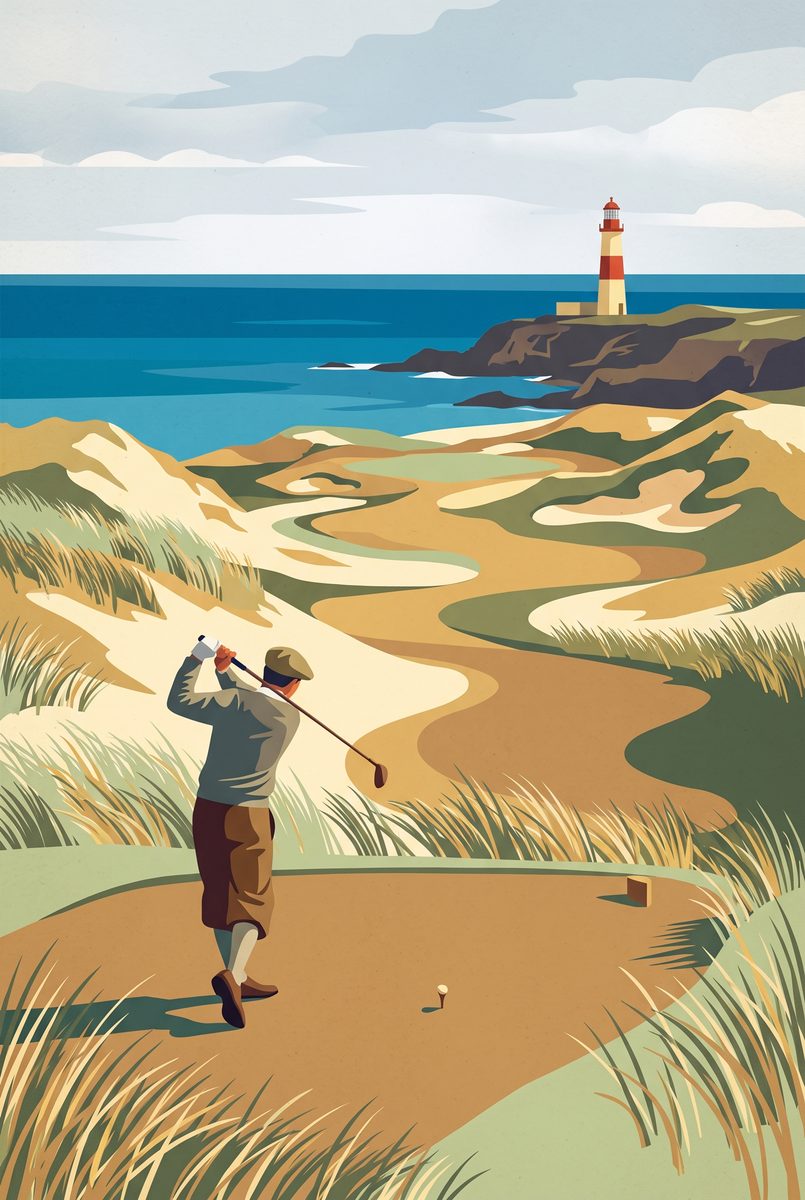 Seaside Linksfrom £17.99
 -
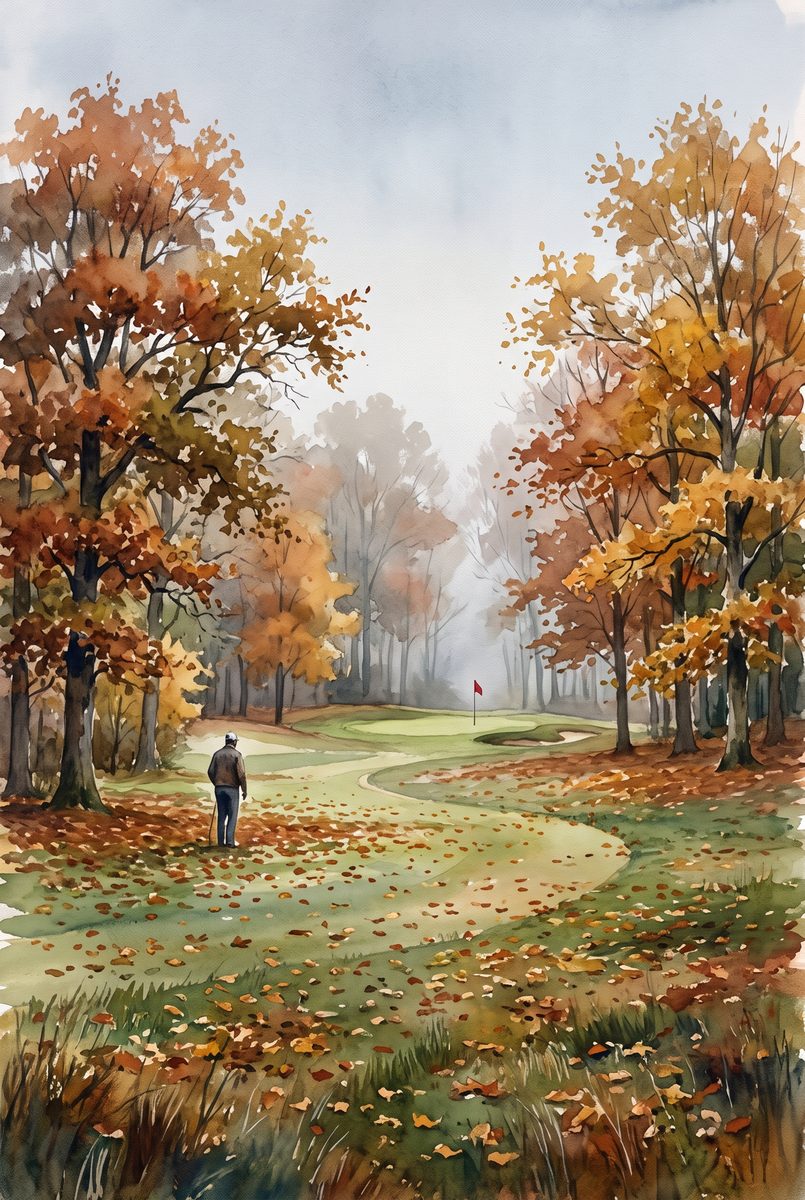 Autumn Parklandfrom £17.99
 -
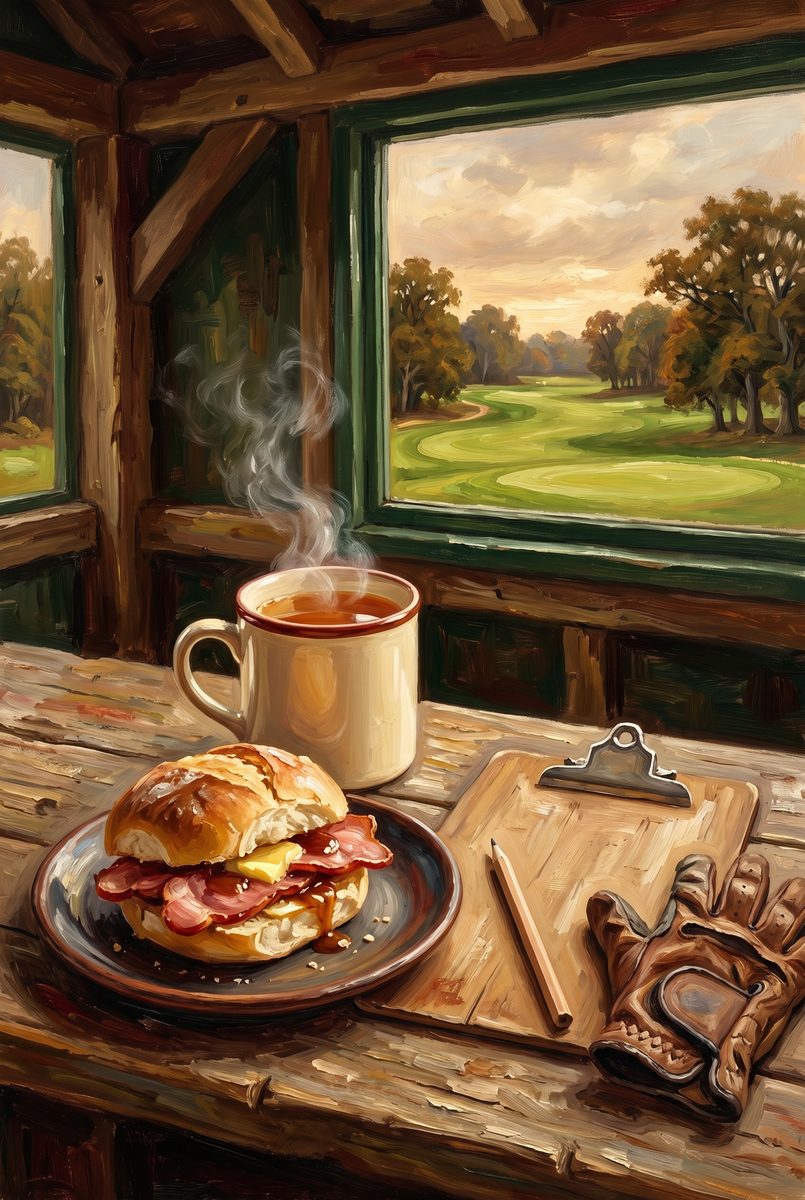 The Halfway Hutfrom £17.99
 -
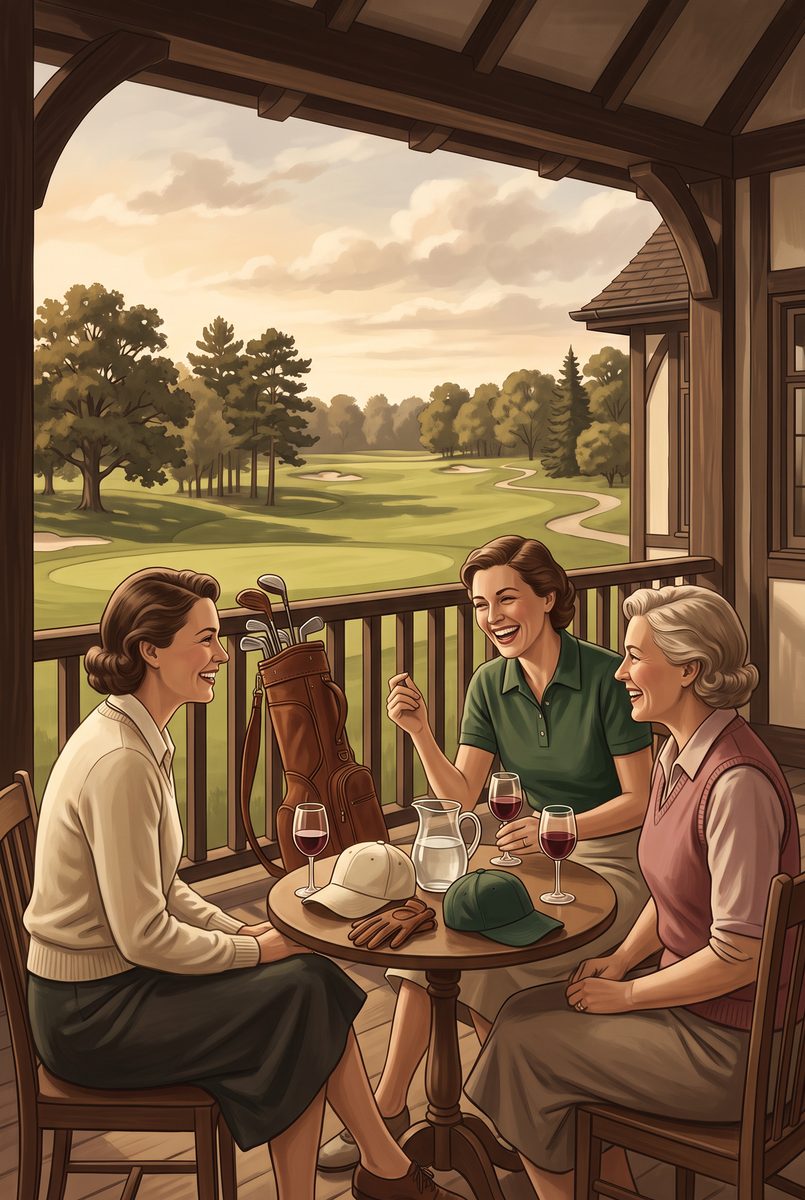 After the Roundfrom £17.99
How to use this page. Pick the group that matches the golf they play, then the painting inside it. Every one is made to order, with framed, gallery canvas, framed canvas, metal and wood options on all twenty. The paper is the same at every size: 250gsm uncoated off-white archival stock.
Links and the coast, four paintings
Links at Dusk is the one most people mean by links golf: a windswept coastal course painted loose and plein-air, dunes, a burn crossing the fairway, gulls in a peach sky. Seaside Links takes the same ground as a vintage travel poster instead, dunes and marram with the fairway snaking away to a distant lighthouse in azure, sand and signal red, so it reads as graphic where the first reads as weather. The Clifftop Short is a par three perched above a crashing sea in teal and coral, bold enough to carry a wall on its own. The Stone Crossing is the quiet one of the four: an ancient stone footbridge over a links burn in restrained oil, slate and moss and sand under overcast light, and the right gift for someone whose favourite courses are the old ones.
Heathland and parkland, four paintings
Heathland and parkland are the quieter half of the range, and the four here are built for a wall that is already busy. Heathland Morning is purple heather and silver birch along an undulating fairway in delicate watercolour, heather and sage and pale gold. The Long Fourth takes a sweeping heathland dogleg and draws it as a vintage travel poster, fairway green against heather purple. Gorse in Bloom is a spring fairway ablaze with yellow, done mid-century flat in bold shapes of yellow, green and sky blue. Autumn Parkland is the other end of the year: oaks and beeches in russet and gold along a misty fairway, atmospheric watercolour in amber, olive and grey-blue.
Moments in the round, seven paintings
These are about a point in the day rather than a kind of ground, which makes them the easiest to match to a specific golfer. The First Tee is a parkland hole at dawn in classical oil, mist lifting off the fairway and long gold light through the oaks. Dawn Fourball puts four players in soft silhouette on a misty heathland dawn, which makes it a painting about the people rather than the golf. Twilight Round is a lone figure up the last under a burning gold-and-violet sky. Winter Round is charcoal and pencil: bare trees, a low pale sun, a frost-striped fairway, and no pretence that it's warm. The Putting Line reads a green and its contours from above as a clean mid-century graphic, one flag and one tracking ball. The Bunker Blast is a greenside splash caught mid-strike as a bold linocut in sand-ochre, black and signal red. And The Island Green is a short par three over still water in delicate watercolour, one flag and one reflection, which is either a nice picture or a threat depending on the recipient.
The clubhouse, three paintings
For the golfer whose favourite part is after the eighteenth, and that is a lot of golfers. The Nineteenth is a golf bag against a bench at golden hour as a warm pop-art print: the round remembered. Clubhouse Evening is a worn leather bag and a flat cap on a lamplit veranda in amber, deep green and brown while the course goes dark outside. The Halfway Hut is tea, a bacon roll and a glove on weathered timber, warm oil, the pause at the turn.
The game's past, two paintings
The Hickory Swing is a 1920s golfer at the top of the swing in plus-fours, an elegant vintage sporting illustration in sepia and cream, and it suits anyone who reads about the game as well as playing it. Player and Caddie is a charcoal study of two figures walking the fairway at day's end, smudged greys and long shadows, and the golf in it is a caddie's bag and a fairway rather than a swing, so it hangs comfortably in a hallway where a picture of a bunker shot would not.
Sizes, formats and what they cost
Posters run A4, A3, A2, 50x70 cm and 70x100 cm, from £17.99. Framed posters come at A3 and A2 in black or natural wood, £69.00 and £102.99. Gallery canvas starts at £51.49, framed canvas at £98.99 in black or dark wood and £111.99 in natural wood, wood at £63.99 and metal at £81.00. The same artwork also goes on a mug at £16.99 and a bottle at £28.99. Every price includes UK delivery, and every size and format is listed on each artwork's own page.
What this page does not offer
No real course is depicted and no club is named, so if the brief is a print of a specific eighteenth, this is not it: the course print works from your own photograph instead. There is no A1, the largest paper size being 70x100 cm. And nothing is lettered or engraved.
Where this sits
The paintings open on the wall, the last stage of the path. Which gift is worth giving applies one test to all of them, and everything in one place puts them beside the two personalised flows.